Foundation Board
Leadership responsible for directing the statutory, scientific, and organizational activities of the In Situ Foundation.
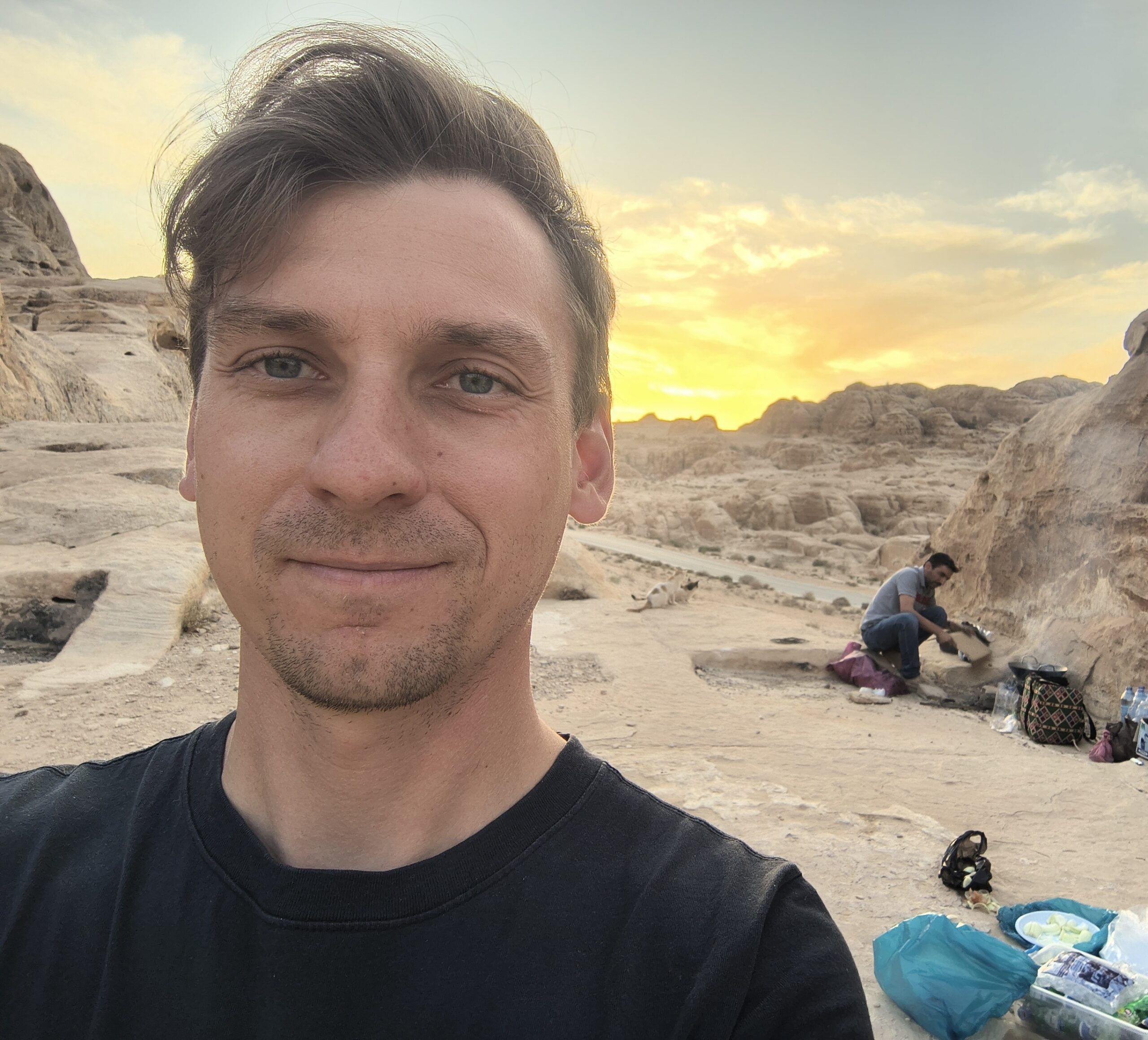
Jacek Karmowski, PhD
President of the Board
Archaeologist affiliated with the Institute of Archaeology at the Jagiellonian University in Kraków. In his work, he bridges traditional archaeological methods with modern digital approaches, focusing on the study of early settlement patterns and cultural landscapes.
He earned his doctoral degree in 2021 from the Jagiellonian University, analyzing urbanization processes in Egypt and the southern Levant in the fourth millennium BCE through architecture. He expanded his academic background through the doctoral programme “Society – Environment – Technologies” at JU and postgraduate studies in GIS at AGH University of Krakow.
His research focuses on early urbanization across the Near East, the Early Bronze Age, and the integration of digital technologies into field archaeology. He specializes in GIS, photogrammetry, and 3D modeling applied to architectural and landscape reconstructions as well as spatial simulations.
He has gained extensive field experience through expeditions across Poland, Egypt, Jordan, Israel, Germany, Bulgaria, and Ukraine. He is the author of over thirty scientific publications, an associate editor of the journal Studies in Ancient Art and Civilization (SAAC), and a member of the Commission on Archaeology of Mediterranean Countries (PAU). He participates in the Mare Nostrum Lab Flagship Project (Steering Committee, Remote Sensing Team). As an academic lecturer and field school instructor, he actively trains students in modern archaeological and bioarchaeological documentation methods.
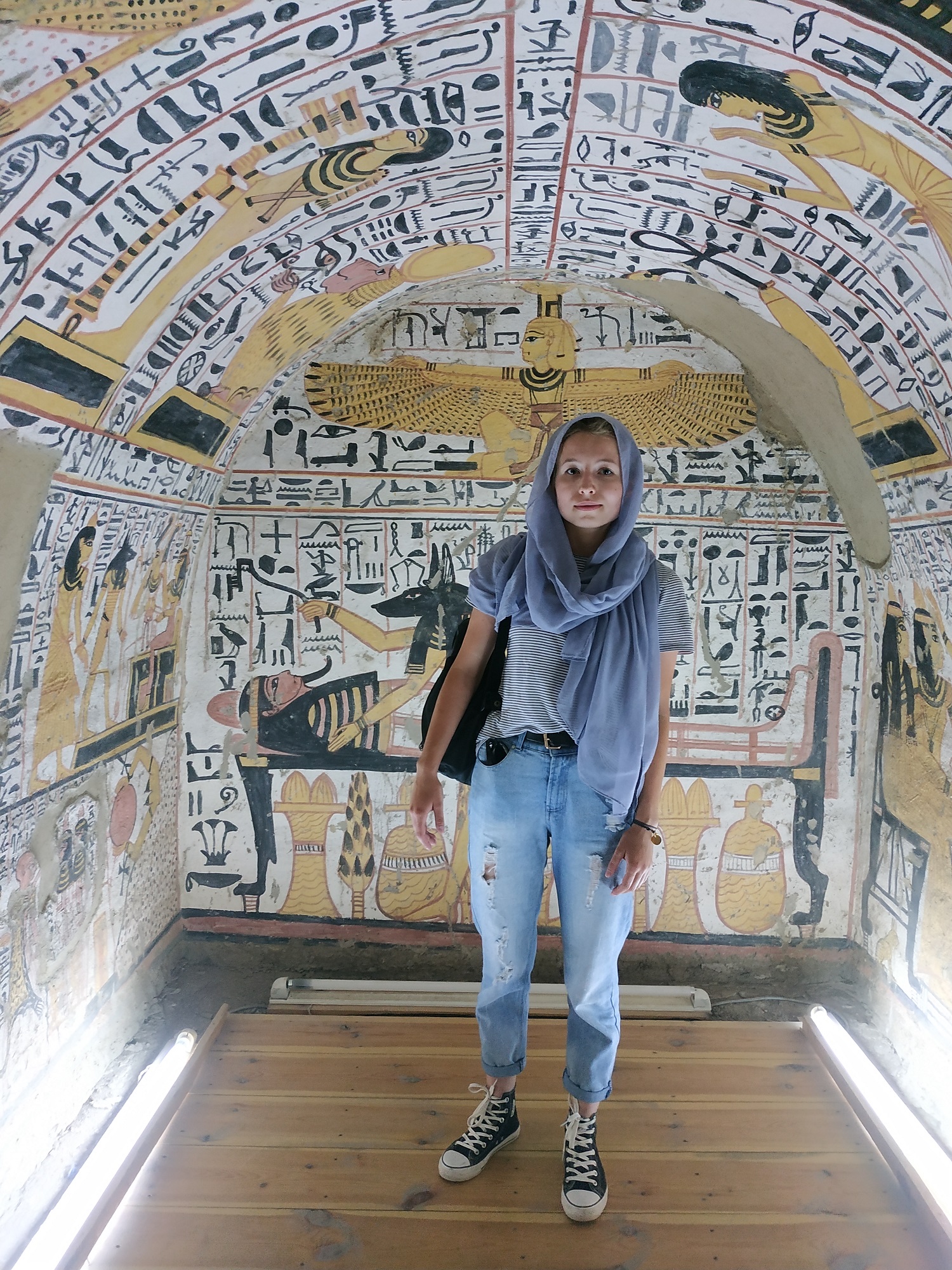
Adrianna Niźnik-Karmowska
Vice-President of the Board
Archaeologist and religious studies scholar, holding degrees in Archaeology and Religious Studies from the Jagiellonian University. She has also completed postgraduate training in Forensic Anthropology at the Jagiellonian University Medical College. She is currently pursuing a PhD in Archaeology at the Jagiellonian University, where her doctoral research focuses on funerary practices in the Southern Levant during the Late Bronze Age and Early Iron Age.
She is also involved in a research project conducted by the Polish Academy of Sciences focusing on the bioarchaeological and chronological aspects of the Domasław cemetery, where she is responsible for the osteological examination of cremated human remains. Her professional experience includes archaeological fieldwork at sites from different periods in Poland, Egypt, and Israel. She has also participated as a volunteer in archaeological excavations conducted by the Auschwitz-Birkenau Museum in Oświęcim.
Her research interests focus on funerary archaeology, ritual and religious practices, and beliefs concerning death, burial, and the afterlife, particularly in the ancient Near East. She is also interested in early Christian traditions and Coptic religious culture. Her interdisciplinary background in archaeology, religious studies, and forensic anthropology allows her to approach human remains and funerary contexts from both bioarchaeological and cultural perspectives.
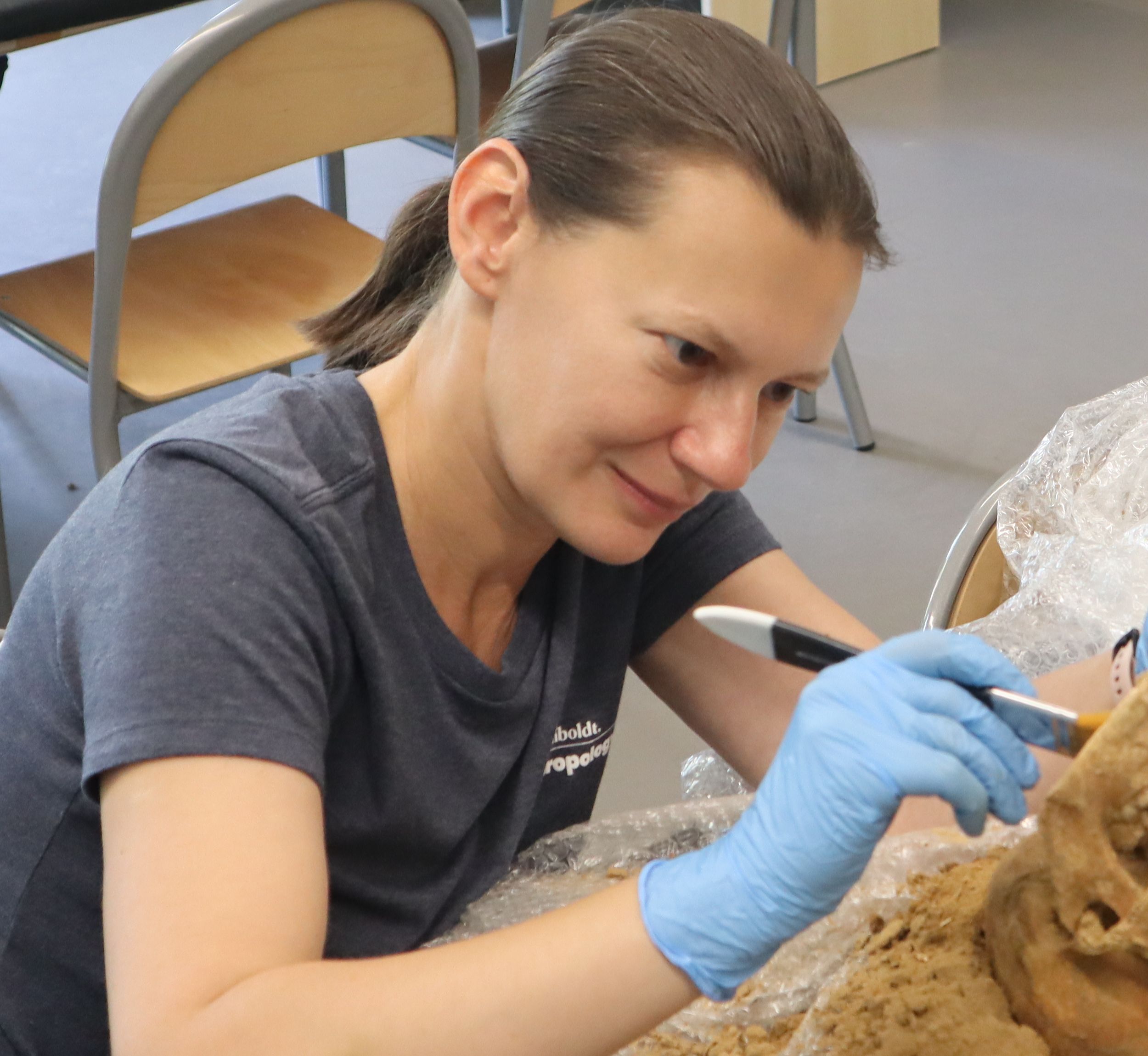
Katarzyna Ślusarska, PhD
Board Member
Bioarchaeologist at the Chair of Archaeology, University of Szczecin. Her research combines archaeological and osteological approaches to the study of past populations, with particular attention to human–environment relationships, health, and lived experience.
Her doctoral dissertation focused on funerary practices among Bronze Age communities of the Black Sea steppes. She has also conducted archaeological fieldwork in Ukraine, which forms an important part of her research experience in Bronze Age archaeology.
She directs the interdisciplinary research project at the late medieval cemetery of Żelewo in north-western Poland. The project integrates archaeological, bioarchaeological, historical, and environmental evidence to reconstruct the lives of a rural community functioning within a landscape transformed by the expansion of Cistercian estates. She is also a bioarchaeologist in the Research Team for Post-Medieval Funerary Culture at the University of Szczecin, where she contributes to the investigation of post-medieval burial crypts and human remains from funerary contexts in Western Pomerania.
Her research interests include Bronze Age archaeology, human–environment relationships, and the bioarchaeology of children and childhood. She is particularly interested in developmental osteology and in reconstructing childhood health, growth, and lived experience from skeletal remains. More broadly, her bioarchaeological research explores health and disease, disability, care, and the ways in which social and environmental conditions shaped individual lives in the past.
She is also an editor of Open Archaeology and is involved in international research collaboration and archaeological field training.
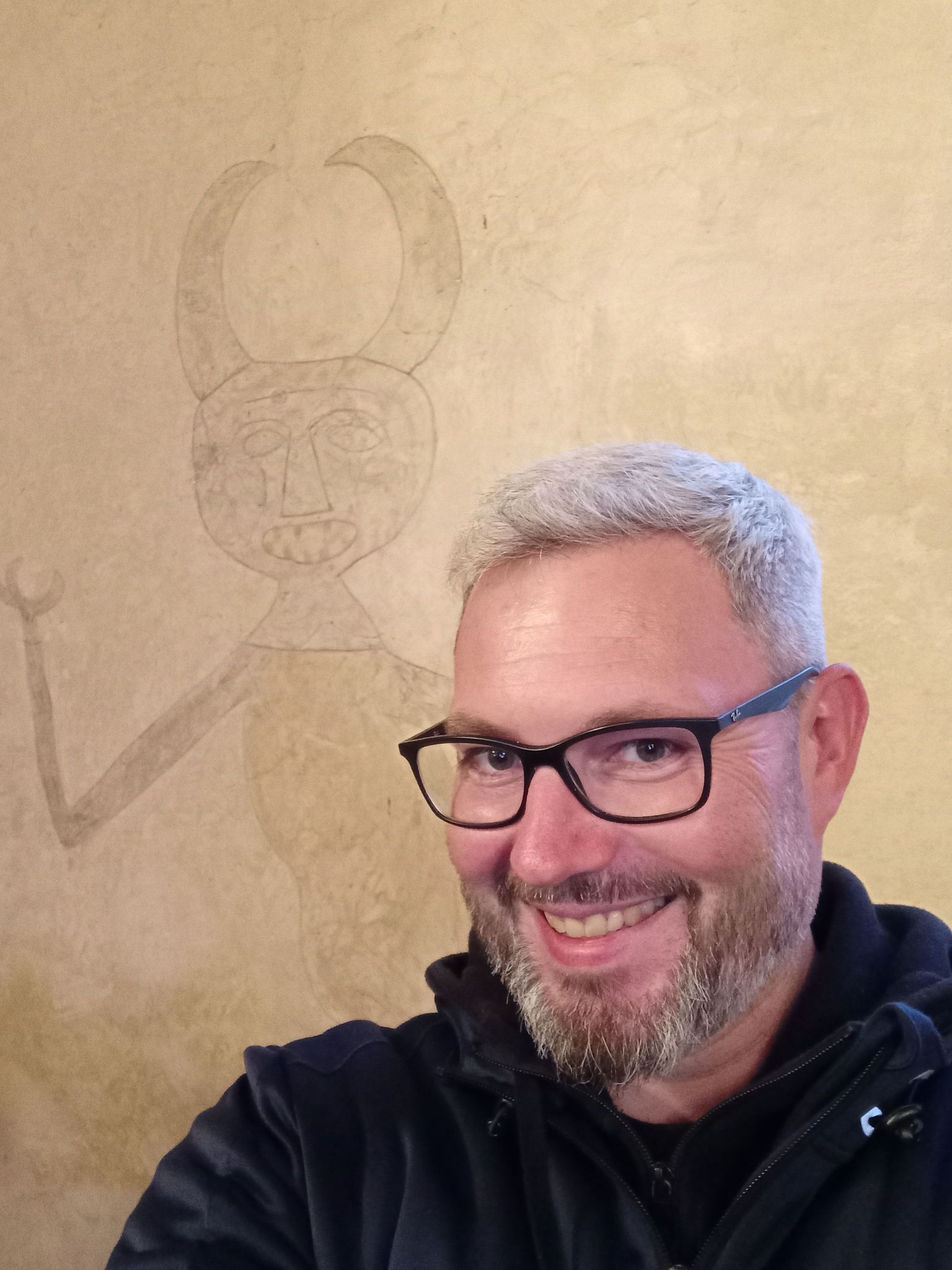
Michał Adamczyk, PhD
Board Member
Graduate of History (2010) and Archaeology (2013) at the University of Szczecin. His doctoral thesis (The Palaeolithic and Mesolithic of the Isles of Pomeranian Bay, 2016) was written under supervision of Professor Jacek Kabaciński and defended at the Institute of Archaeology and Ethnology of the Polish Academy of Sciences.
He is an employee of the National Museum in Szczecin since 2018, where he is the Curator of the Palaeolithic and Mesolithic collection. In 2024 he was employed as an Assistant Professor at the University of Szczecin. His classes are the Archaeology of Palaeolithic and Mesolithic and Environmental Archaeology, among others. In 2014-18 he was a contractor in Kulturhistorisk museum Universitet i Oslo (KHM UiO) and in Norges teknisk-naturvitenskapelige universitet in Trondheim (NTNU), both in Norway.
In 2012-14 he participated in the Nordic Graduate School in Archaeology, during which he attended workshops and classes in France, Norway, Sweden, Estonia, Latvia and Poland.
His research is concentrated on the Palaeolithic and Mesolithic in Northern Europe, Environmental Archaeology, Experimental Archaeology and Lithic Technology. His fieldwork experience includes research in Poland, Norway and Spain, and multitude of sites such as peat bogs and caves. He is part of the team conducting fieldworks at Żelewo since its inception in 2023. His responsibilities are lithics and research on Palaeolithic and Mesolithic settlement at the site and its surroundings.
In Situ Foundation
E-mail: InSitu@insituarcheo.com
© 2026 In Situ Foundation. All rights reserved.